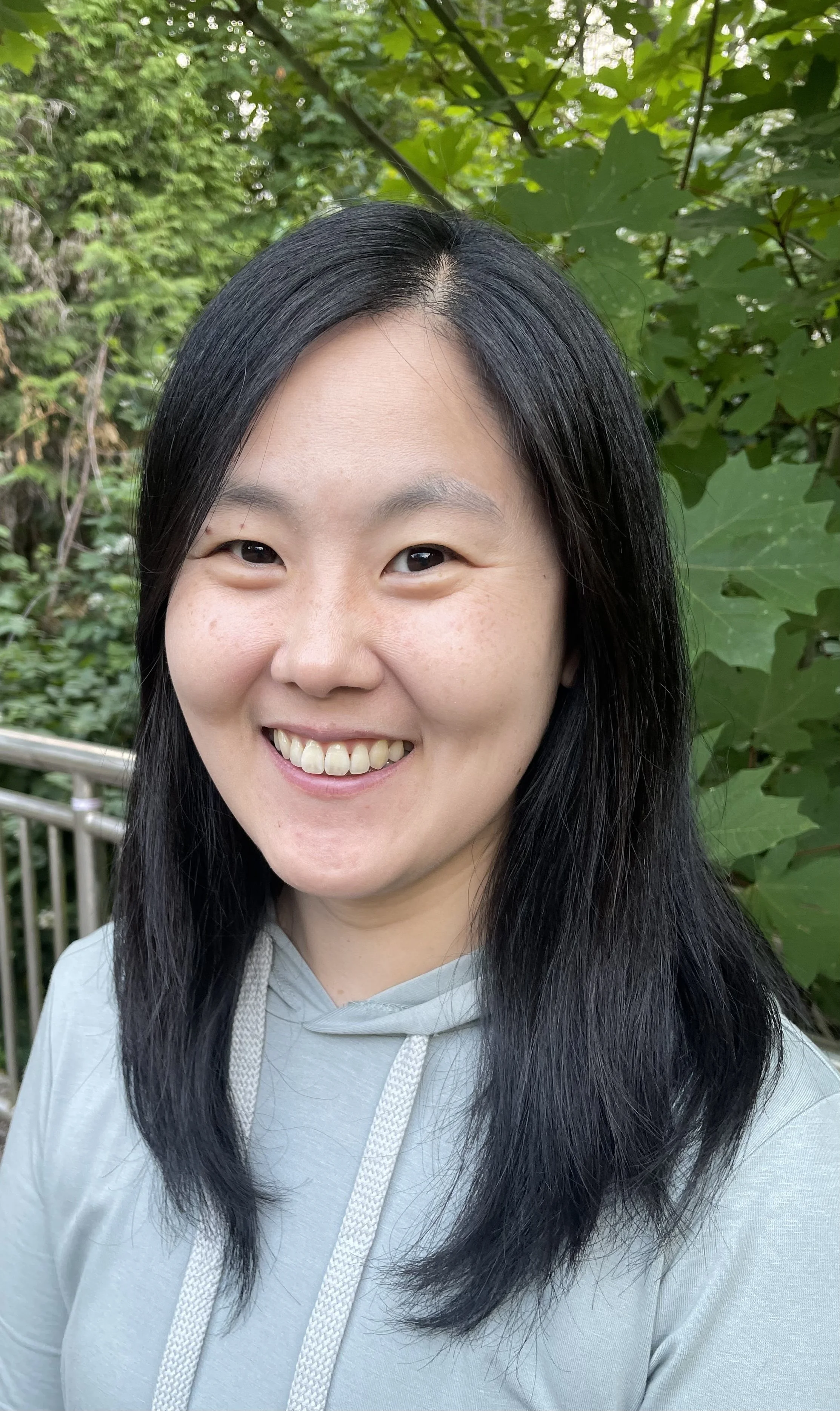
About me
My approach is informed by evidence-based treatments while embracing the cultural and sociopolitical contexts within your lived experiences to support your unique needs in therapy. This means I flexibly apply the core principles of evidence-based treatments (vs. the “by-the-book” approach that may not be sensitive to these contextual factors). I strive to amplify your inner strengths and wisdom by providing a non-judgmental, compassionate, and encouraging therapeutic space. Within this, my intention is to empower you to lead your own life with confidence and ease in a way that is authentic to you even when your path does not follow prescripted messages of what your life should look like.
How my lived experiences shape me as a psychologist
I was born and raised in South Korea. South Korea is mostly racially alike with a shared, homogeneous culture; therefore, diversity and social justice-related values as we understand it in the United States were under-appreciated. Growing up in Korea, many of my identities including Korea-born, Korean as my primary language, and being a cisgender person were part of a dominant group, although I also held identities in the minority group such as being a woman. I was privileged to be unaware of the many challenges experienced by individuals with backgrounds different from mine. With the complex social structure of the United States, many of my identities have shifted to those of minority - woman of color, non-majority Korean ethnicity, first-generation immigrant, and English as a second language speaker. This personal experience has allowed for vast personal growth that shaped my commitment to cultural humility and social justice in my work as a psychologist.
My professional background
-
Education
Doctor of Philosophy (PhD), Clinical Psychology, Indiana University - Purdue University, Indianapolis (IUPUI)
Masters of Science (MS), Clinical Psychology, IUPUI
Bachelor of Science (BS) with High Honors, Psychology, University of Maryland
Advanced Training
Postdoctoral Clinical Fellowship, Addiction Treatment Center, VA Puget Sound Health Care System - Seattle
Clinical Psychology Internship/Residency, Integrated Primary Care Track, University of Washington School of Medicine
Licensure
Psychologist, PY61224141 (Washington State)
PSYPACT/APIT Mobility # 23567
-
I worked for VA Puget Sound Health Care System Seattle as a public servant (staff psychologist) for about 4 years after my postdoctoral fellowship at the same hospital. I worked at the Mental Health Clinic and Primary Care Mental Health Integration.
I worked with Veterans with various mental health concerns including, but not limited to, adult ADHD, trauma/PTSD, addiction, depression, and anxiety as well as health behavior changes such as chronic illness management and sleep. Often times, I worked with Veterans who have never had experience with therapy or those with stigma around mental health. I am grateful to have worked with these Veterans who have improved their lives by trying something new like therapy.
During my time at the VA, I ran therapy groups including Cognitive Behavior Therapy (CBT) for ADHD and CBT for Substance Use Disorders in addition to working with Veterans individually.
I had an opportunity to start the Asian American & Pacific Islander (AAPI) Veteran Support Group to provide a safe communal space for AAPI Veterans to come together and support each other. This group started as a single member group for several months, which has expanded into two full groups by the time that I left the VA. Although I am no longer involved, supporting AAPI Veteran community through this group was one of the most rewarding experiences I had at the VA.
-
English
Korean
-
Cognitive Behavioral Therapy
Motivational Interviewing
Cognitive Processing Therapy for PTSD
Prolonged Exposure for PTSD
Acceptance & Commitment Therapy
Problem Solving Therapy
Patient-centered, strength-based approach
-
Research Grants & Fellowships
F31 Predoctoral Individual National Research Service Award, National Institutes of Health (NIH)/National Institute of Alcohol Abuse and Alcoholism (NIAAA)
T32 Predoctoral Institutional National Research Service Award, NIH/NIAAA
Post-Baccalaureate Intramural Research Training Award, Cognitive Neuroscience & Psychopharmacology Section, Neuroimaging Branch, NIH/National Institute on Drug Abuse
Awards
Clinical Psychology Award for Research Excellence, IUPUI (given to one graduate student to recognize outstanding performance in research)
MAGS/Proquest Distinguished Thesis Award - Social Science area (given to one master’s thesis to recognize distinguished scholarship and research at the master’s level among 120+ member institutions in Midwest)
University Distinguished Master’s Thesis Award, IUPUI (award recognizing the highest evaluated “truly outstanding” thesis)
Publications(see my GoogleScholar profile, select publications hyperlinked)